

How Blockchain, IIoT and AI Make the Global Supply Chain More Resilient

The Suez Canal blockage in March 2021 pointed out a major pinch point — for lack of a better term — within the global supply chain. One ship getting blown off course during a predictable sandstorm halted 12% of global trade — an estimated $9.6 billion per day. While the Ever Given was freed after six days, the ripple effects of the event will be felt for months due to the thousands of ships delayed in those six days.

Witnessing the magnitude of what a single ship mishap can do to interrupt global trade makes it obvious that safeguards need to be put in place to prevent such events in the future. If an accident put a stop to 12% of global trade, what kind of damage could an intentional act inflict?

Continue Reading “How Blockchain, IIoT and AI Make the Global Supply Chain More Resilient”

How to Keep Your Food Plant Construction Project on Track

Technology and ever-increasing consumer demand are driving food and beverage companies to compete at a different level than ever before. Speed to market is increasingly important to doing business — the faster a new plant can be built or renovated, the sooner it can begin producing a return on investment.

So how can you ensure your next construction project stays on track? Let’s look at five ways to set yourself up for success, whether you’re tackling a greenfield project or a retrofit.

Continue Reading “How to Keep Your Food Plant Construction Project on Track”

How an Innovative Starbucks Processing Plant Takes Food Safety to New Levels

Photography: Robert Pepple

In response to the growing demand for home-brewed instant coffee that delivers true “coffee shop” flavor, Starbucks came to Stellar wanting to build a unique soluble coffee plant. The award-winning facility in Augusta, Georgia, was designed to produce the company’s VIA® instant coffee products, and it’s cutting-edge in every sense of the word.

Among the plant’s many innovations, food safety was a top priority. There are several lessons food and beverage manufacturers can learn from how Starbucks addressed this critical issue.

Continue Reading “How an Innovative Starbucks Processing Plant Takes Food Safety to New Levels”

Cold Storage Distribution: How Caspers is Utilizing Packaged Refrigeration Systems

Photo courtesy of Shecco Media


One of Florida’s oldest third-party logistics companies is introducing one of refrigeration’s newest innovations into its new cold storage facility: low-charge packaged refrigeration systems. With a focus on moving to eco-friendly refrigerants, McDonald’s franchisee Caspers Cold Storage and Distribution will be cooling its new warehouse with an ammonia/ CO2 and low-charge ammonia DX system. Because Stellar will be designing and building the new systems, Accelerate America editor Andrew Williams interviewed Stellar’s Brandon France to learn more about the project. Check out the feature article, “I’ll have CO2 and ammonia with that” in this week’s blog post to learn more about how the company is using low-charge refrigeration systems to lower costs, reduce installation time and utilize green refrigerants.

Continue Reading “Cold Storage Distribution: How Caspers is Utilizing Packaged Refrigeration Systems”

Is Your Food Processing Plant Safe From Listeria?

Listeria is a foodborne illness that can have dire consequences–sometimes, deadly. The bacteria is characteristically persistent, able to not only thrive for years, but within frozen storage and outside of the expected environments, such as meat processing plants. Are you sure you’re taking the proper measures to ensure listeria isn’t growing in your facility?

Continue Reading “Is Your Food Processing Plant Safe From Listeria?”

[VIDEO] See How Virtual Reality Can Take You Inside Your Food Plant Design

Virtual walkthroughs with VR headsets

Virtual reality (VR) is changing the game when it comes to designing facilities for the food and beverage industry. With a VR headset, you can “walk through” your new building during the design phase, months before the first brick is laid.

Rather than examining a 2D design on a sheet of paper, 3D modeling coupled with virtual reality technology can bring a building to life without having to interpret complicated designs.

Continue Reading “[VIDEO] See How Virtual Reality Can Take You Inside Your Food Plant Design”

3 Benefits of a Food Plant Observation Deck

Food plant tours can serve as a valuable sales tool for your company. An observation deck, or viewing gallery, is a sanitary design solution that allows you to roll out the welcome mat to visitors. This moderate, added cost solution can be ground level or elevated, offering a behind-the-scenes look at your plant’s critical processes or packaging. Let’s review design best practices in addition to three benefits these structures can offer your food plant.

Continue Reading “3 Benefits of a Food Plant Observation Deck”

5 Tips for Automating Your Food Processing Plant

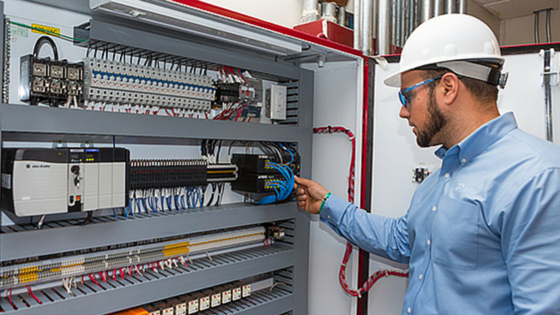
Total automation may be an ideal for most food processors, but it can be difficult to determine how to connect every system in a food plant—or if they should even be connected at all. To optimize ROI, it’s important to learn which areas of your food processing facility are best suited for automation. Below are five tips for improving your plant’s automation capabilities.

Continue Reading “5 Tips for Automating Your Food Processing Plant”

Back to the Basics: How to Optimize Your Clean-in-Place System

A number of food manufacturing facilities have been utilizing clean-in-place (CIP) for years. It’s the method of cleaning processing equipment and piping without disassembling it. While most of us already know what CIP is, when was the last time you performed a thorough audit of your system?

Over the years, changes to the systems being cleaned may have caused the CIP system set-point ratios to change without notice to the operators — making it more out of whack than you may realize.

Continue Reading “Back to the Basics: How to Optimize Your Clean-in-Place System”

Considering the Plant-Based Protein Market? Process This First.

The plant-based foods category is diversifying as retail sales have continued to increase, even during the COVID-19 outbreakAccording to Euromonitor, the meat-substitute market is expected to reach $2.5 billion by 2023.

Such impressive numbers may have you wondering if you should try the tofu and look into entering this emerging market. Let’s lean on the “know before you go” adage and help you make an informed decision.

Continue Reading “Considering the Plant-Based Protein Market? Process This First.”