

2 Biggest Threats to Food Plant Construction Budgets

Constructing a new food or beverage plant can be similar to a lot of big investments in life where attention to detail can make or break your budget. Think about renovating a house, buying a car or maintaining a boat — any of these things can quickly turn into a money pit, but it can be efficient if you plan accordingly. The same goes for your next construction project. Continue Reading “2 Biggest Threats to Food Plant Construction Budgets”

Five Ways to Ensure Your Food Safety Audit Goes Well

Quality assurance is one key to a successful food safety audit


The Food Safety Modernization Act (FSMA) expanded the FDA’s authority to regulate the conditions of food manufacturing facilities and how products are produced, manufactured, transported, imported and marketed in the United States. Food safety audits, whether conducted by an internal team or by an outside consultant, will ensure that your food processing plant is in full compliance with FDA regulations. Continue Reading “Five Ways to Ensure Your Food Safety Audit Goes Well”

An Inside Look at Sunsweet’s Prune Processing Facility in South America [PHOTOS]

Sunsweet, a grower-owned cooperative based in California, is the world’s largest and most famous brand of dried tree fruits. When the company decided to expand their prune processing facility in Chile, they partnered with Stellar to plan, design and navigate the international construction process.

Today, the processing facility is a full-fledged operation supporting Sunsweet’s ongoing growth. Given its complexity and the company’s investment in cutting-edge features, the plant also serves as a “learning lab” where Sunsweet can test ideas and experiment with different processing efficiencies that will be applied to its future facilities.

Continue Reading “An Inside Look at Sunsweet’s Prune Processing Facility in South America [PHOTOS]”

Are You Getting the Most Accurate Weight Measurements from Your Load Cells?

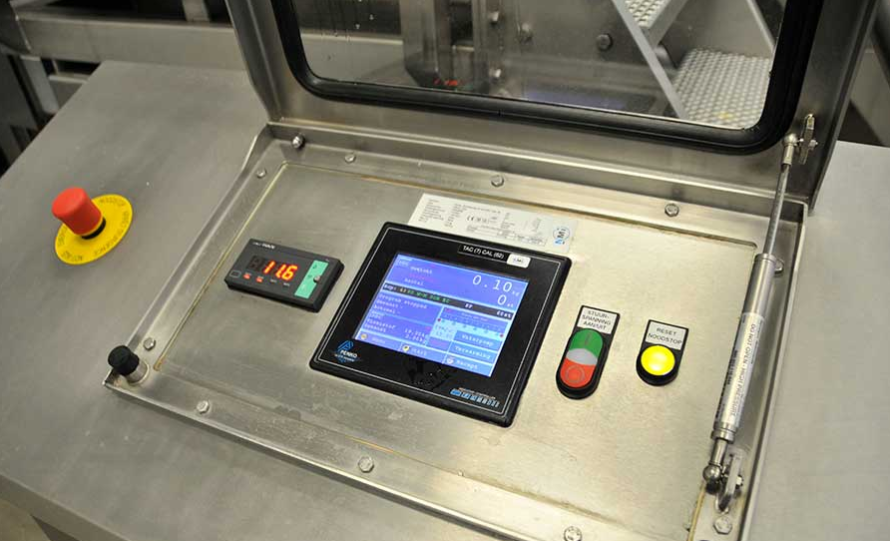
Photo: Food Engineering’s “How to determine the best sensor for filling applications”


Filling and weighing systems are a fundamental part of the food and beverage industry. On the line, they establish fill weights, volumes and levels for products whether it’s flavorings, beverages, slurry products or bulk containers of dry and/or liquid ingredients.

When it comes to recipes, the slightest change in ingredients can spoil an entire batch of product — that’s why precise weighing is paramount.

Continue Reading “Are You Getting the Most Accurate Weight Measurements from Your Load Cells?”

What Food Processors Should Know About the New Earthquake Building Rating System

In November 2015, the United States Resiliency Council (USRC) launched the USRC Earthquake Building Rating System, a first-of-its-kind performance rating system for seismic hazards. This system is the first reliable, consistent method to determine how susceptible buildings may be to earthquakes, providing facility owners, insurance providers, and engineers with a better understanding of how to prevent losses. The rating system assesses buildings on three important criteria, each of which is detailed later in this article.

Continue Reading “What Food Processors Should Know About the New Earthquake Building Rating System”

Protect Your Food Processing Facility from Dust Explosions

The Imperial Sugar dust explosion of 2008 was a tragic reminder of the potential for common food processing ingredients to cause unneeded loss of life and property in a food plant. 

While it’s not feasible to ditch dusty ingredients like sugar, flour and cornstarch in most food processes, you should be aware of the danger particular ingredients create and formulate a plan to keep your workers and plant safe.

Continue Reading “Protect Your Food Processing Facility from Dust Explosions”

Four Things You Need to Know About the Permitting Process in China

Successful U.S. businesses in China know one thing: building relationships with Chinese officials is the key to effectively establishing, running and managing a business. Especially when obtaining the necessary permits and approvals for a new food processing plant – which can be a lengthy and frustrating process – it’s imperative to play by a few key rules to ensure a smoother permitting process.

Continue Reading “Four Things You Need to Know About the Permitting Process in China”

Four Reasons Shrinkage-Compensating Floors Make Sense for Warehouses

The floors of food distribution facilities must endure a lot wear and tear, with heavy forklift traffic continually moving across the surface. As new warehouse facilities are being built, owners are choosing to invest in shrinkage-compensating concrete for the flooring, which eliminates control joints, reduces curling, and minimizes cracks.

Continue Reading “Four Reasons Shrinkage-Compensating Floors Make Sense for Warehouses”

IIoT Tech Could Free Up Your Facility for Essential Workers

As the coronavirus pandemic rocked the world early this year and its scope was realized in the United States, food plant operators had to adapt quickly to meet new federal and local orders that mandated social distancing. At the same time, producers saw restaurant demand plummet while retail and online grocery store market shares skyrocketed. As unpaid orders originally bound for restaurants rotted in storage, retailers had trouble keeping milk and eggs on the shelf.

This dramatic shake-up has forced food plant operators to reorganize equipment, production lines and workers to maintain safe social distancing, especially in the wake of multiple COVID-19 outbreaks among food plant employees.

Additionally, the wild fluctuations the supply chain experienced exposed vulnerabilities created by the communication lag between suppliers, manufacturers and retailers.

Industrial Internet of Things (IIoT) technology has the potential to solve some of these COVID-19-related problems and revolutionize the future of the food processing industry. 

Continue Reading “IIoT Tech Could Free Up Your Facility for Essential Workers”

3 Applications for Big Data in Food Plants

Big data comprises the large volume of data that businesses collect on a day-to-day basis. The question is: Are you taking advantage of it?

Data and analytics tools can be customized to meet your facility’s unique needs and goals — whether you simply want to gain insights to resolve certain pain points or install system-wide automation technology that takes your efficiency to the next level. 

Let’s take a look at three applications for big data in a food processing facility:

Continue Reading “3 Applications for Big Data in Food Plants”